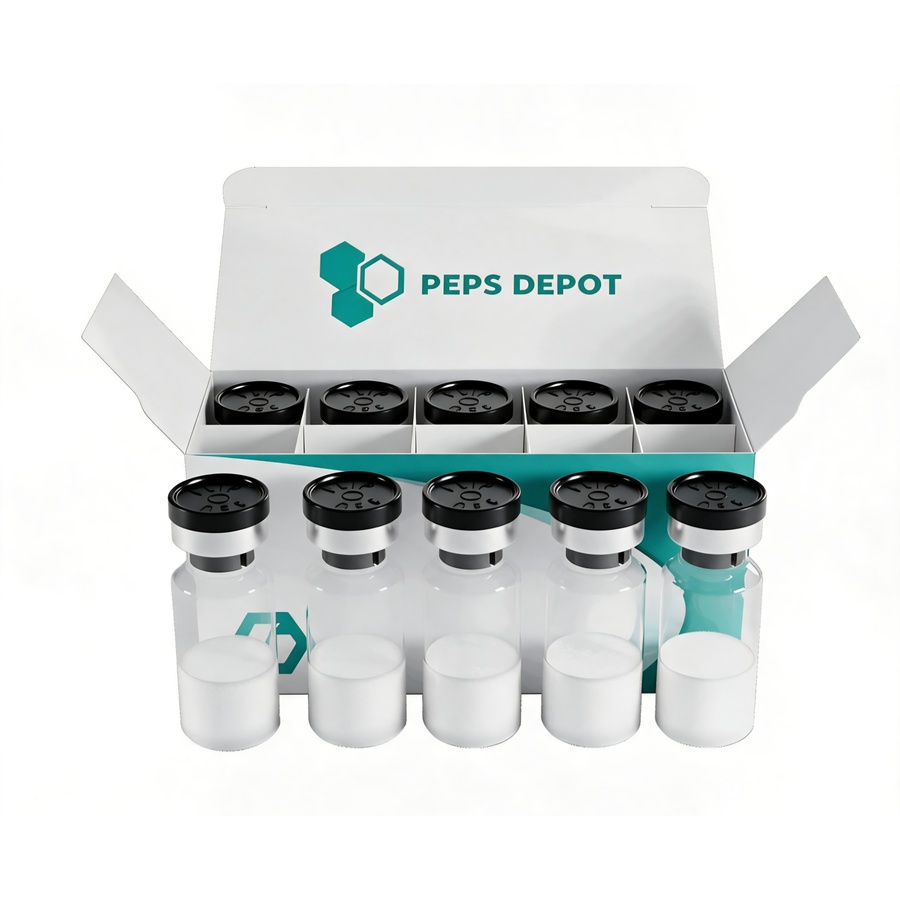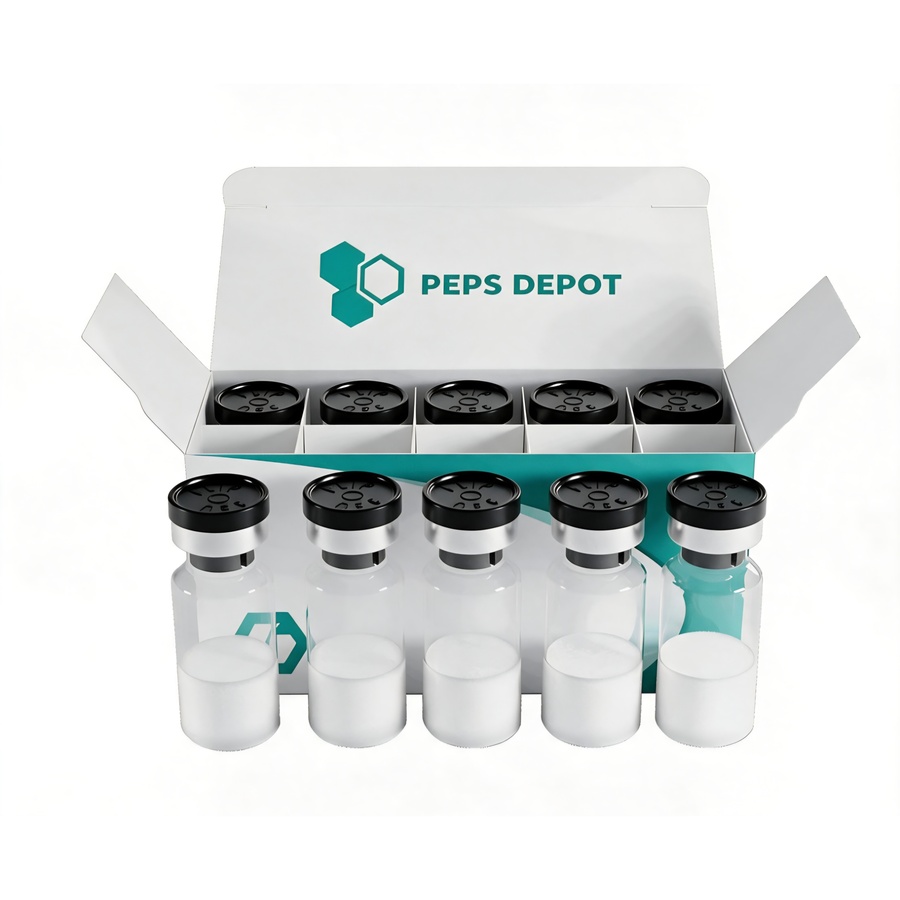
Retatrutide 30mg (5-Vials Bundle)
Retatrutide is a next-generation triple receptor agonist studied for activity at the GLP-1, GIP and glucagon receptors — three pathways central to metabolic research. Every batch is lyophilized for transit stability and verified by third-party LC-MS before it ships.
- ✅ Order today › 📦 Dispatch (2 business days) › 🚚 Delivery (3–9 business days)
- 🧪 Most lab-tested source in the industry
- ⭐ 500+ reviews across independent platforms
- 🔒 Secure checkout — Crypto, Cash App & Venmo
- 📦 Discreet packaging, guaranteed delivery
Product Details
| Purity | ≥99% (LC-MS verified) |
| Form | Lyophilized powder, preservative free |
| Storage | Cool and dry; refrigerate after reconstitution |
| Batch | COA available on request |
Why Choose Retatrutide 30mg (5-Vials Bundle)?
Retatrutide is a next-generation triple receptor agonist studied for activity at the GLP-1, GIP and glucagon receptors — three pathways central to metabolic research. Every batch is lyophilized for transit stability and verified by third-party LC-MS before it ships.
Key Benefits
- Triple agonist (GLP-1 / GIP / glucagon) research compound
- Third-party tested — COA available on request
- Lyophilized, preservative free
- Ships from the USA in discreet packaging
About Retatrutide 30mg (5-Vials Bundle)
Retatrutide is a triple receptor agonist — a synthetic peptide engineered to bind the GLP-1, GIP and glucagon receptors with a single molecule. It represents the current frontier of incretin research, adding glucagon-receptor activity to the dual mechanism established by tirzepatide.
The glucagon component is what distinguishes it. Glucagon-receptor agonism is associated in the literature with increased energy expenditure and hepatic fat mobilisation — effects not produced by GLP-1 or GIP activity alone.
Supplied as lyophilized powder for laboratory research, verified by third-party HPLC and LC-MS. Not for human consumption.
Comparing this against the other one? Read the full retatrutide vs tirzepatide research comparison →
Receptor targets, development stage and the published evidence for both, side by side.
Research background
Triple receptor pharmacology
Retatrutide engages three distinct receptors: GLP-1 and GIP, shared with tirzepatide, plus the glucagon receptor. The pharmacological question under study is whether the third target produces effects additive to, or distinct from, dual agonism.
The glucagon component
Glucagon receptor activity is counter-intuitive in a metabolic compound, since glucagon raises blood glucose. The research rationale is that its effects on energy expenditure and hepatic lipid handling operate alongside the glucose-lowering incretin arms.
Phase 2 trial data
Retatrutide has published Phase 2 results in obesity and in metabolic dysfunction-associated steatotic liver disease. Phase 3 programmes are ongoing, so the human evidence base is earlier-stage than semaglutide or tirzepatide.
Hepatic and comorbidity endpoints
Separate trial arms have examined liver fat content and conditions including obstructive sleep apnoea and osteoarthritis, reflecting interest in endpoints beyond weight and glycaemia.
Retatrutide is an investigational compound. It has not completed Phase 3 development and is not approved for human use in any jurisdiction.
Reconstitution
- Equilibrate firstAllow the vial to reach room temperature before opening. Introducing solvent into a cold vial promotes condensation, which affects both concentration accuracy and stability.
- Select the diluentBacteriostatic water — sterile water with 0.9% benzyl alcohol — is standard where the solution will be held for more than a few days. Plain sterile water is appropriate only for single-session use with no storage.
- Add slowly, down the wallDirect the solvent against the inner wall of the vial rather than onto the powder. A stream striking the lyophilized cake causes localized shear that can denature peptide chains.
- Do not shakeSwirl gently, or simply let the vial stand. Agitation introduces air and mechanical stress, and both degrade peptides. Full dissolution usually takes a minute or two.
- Inspect before useA correctly reconstituted solution is clear and colourless. Cloudiness, visible particulate or discolouration indicates a problem with the material or the diluent.
Concentration is set by the volume of diluent added. For a 10mg vial, 2mL of bacteriostatic water yields 5mg/mL. Calculate the working concentration your protocol requires rather than following a generic figure.
Storage and stability
| State | Temperature | Practical shelf life |
|---|---|---|
| Lyophilized, sealed | −20 °C | 24+ months |
| Lyophilized, sealed | 2–8 °C | ~12 months |
| Lyophilized, sealed | Room temperature | Weeks — transit only |
| Reconstituted, bacteriostatic water | 2–8 °C | ~3–4 weeks |
| Reconstituted, sterile water | 2–8 °C | Same session |
Lyophilized peptide is stable enough to survive shipping at ambient temperature, which is why cold-chain courier service is not required for transit. Long-term storage is a different matter — material intended to be held for months belongs in a freezer.
Protect from light, and avoid repeated freeze-thaw cycles. Each cycle causes measurable degradation, so dividing a reconstituted stock into single-use aliquots before freezing is preferable to thawing and refreezing one vial repeatedly.
Purity and verification
Every lot is tested by an independent laboratory using two orthogonal methods. HPLC (high-performance liquid chromatography) establishes purity as a percentage of total peptide content, separating the target compound from truncated sequences and synthesis by-products. LC-MS (liquid chromatography–mass spectrometry) confirms molecular identity by mass.
Both matter. Purity alone is insufficient — a 99% pure sample of the wrong compound is still the wrong compound. Together the two tests establish identity and quality, which is why Retatrutide is released only after both pass.
The certificate of analysis references the lot number printed on your vial label. Request the COA for your lot at sales@pepsdepot.com.
Published research
Peer-reviewed studies indexed in PubMed. Each links to the abstract and, where a free copy exists, to the full text. We link primary sources rather than summarising them second-hand.
Retatrutide-A Game Changer in Obesity Pharmacotherapy
Triple hormone receptor agonist retatrutide for metabolic dysfunction-associated steatotic liver disease: a randomized phase 2a trial
Efficacy and safety of retatrutide, a novel GLP-1, GIP, and glucagon receptor agonist for obesity treatment: a systematic review and meta-analysis of randomized controlled trials
Frequently asked questions
How do you reconstitute retatrutide?
How does retatrutide differ from tirzepatide and semaglutide?
Is retatrutide approved anywhere?
Does this need refrigerated shipping?
Is a certificate of analysis available?
Is Retatrutide approved for human use?
Customer reviews
Related compounds
Compounds studied alongside this one, or acting through related pathways.
Related products